
Background of Hermès
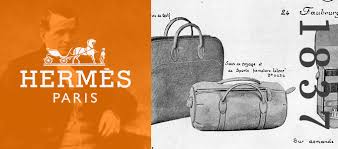
Thierry Hermès founded the company in 1837 as a harness workshop in Paris. Originally, his intent was to serve the needs of European noblemen by providing saddles, bridles and other leather riding gear. In the early 20th century, Thierry’s son Charles-Émile Hermès moved the company’s shop to 24 Rue Du Faubourg Saint-Honore in Paris, where it remains to this very day and is the company’s global headquarters.
Gradually, the company’s product offerings expanded through generations. Between 1880 and 1900, it started selling saddlery and introduced its product in retail stores. In 1900, the company started selling the “Haut à Courroies” bag, which was meant for riders to carry their saddles in it. In 1918, Hermès introduced the first leather golf jacket with zipper, made for the then Prince of Wales. In the 1920s, accessories and clothing were introduced into the portfolio. In 1922, the first leather handbags entered the product line.
The company’s iconic duc-carriage-with-horse logo and signature orange boxes were introduced in the 1950’s. In the 1970’s, the company established a watch subsidiary La Montre Hermès in Bienne, Switzerland. The company acquired tableware manufacturers like Puiforcat, Saint Louis and Perigord in the 1980’s and consolidated its position in these segments of the luxury market.
GIVENCHY
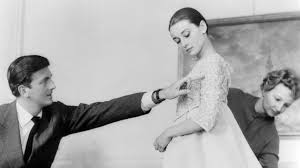
In April of 1952, at the age of twenty-five, Hubert de Givenchy arrived at the Waldorf-Astoria Hotel, in New York, with eight elaborate couture gowns. He was making his American début at the first annual April in Paris Ball, a high-society spectacle that was meant to strengthen Franco-American relations through the power of good old-fashioned beau-monde hedonism. The event featured, among other attractions, zoo animals rented from the Ringling Brothers circus; a living tableau in which Sir Laurence Olivier and Rex Harrison played François I and Henry VIII; a gift of fine French perfume for the women and neckties made in Lyon for the men; and a cavernous ballroom transformed to resemble the gardens at Versailles. And yet the most memorable impression of the night was, perhaps, the one left behind by the six-foot-five wunderkind couturier. During the fashion-show portion of the evening, the crowd cooed over Givenchy’s meticulously embroidered boleros and a starched white peplum cape that looked like stiff meringue.
Givenchy, who died on March 10th, at the age of ninety-one, was born in Beauvais, France, the grandson of a tapestry-maker, and blazed through teen-age apprenticeships at the houses of Jacques Fath, Robert Piguet, and Elsa Schiaparelli before striking out on his own, in February of 1952.

A short history of: Balenciaga
The luxury fashion house has had many reincarnations since its visionary designer retired 50 years ago.
“Balenciaga gave the world fashion. He was the beginning of everything, everything that is news – forever,” said legendary fashion editor Diana Vreeland. Listing everything from raincoats to black stockings, plus the most luxurious fabrics and colour combinations, Vreeland credited designer Cristóbal Balenciaga for creating the future of fashion.
Before he was lauded as one of the greatest designers of the 20th century, Balenciaga grew up in a small village in the Gipuzkoa region of Spain, with his widowed mother who worked as a seamstress to get by. With no formal training, the Basque designer opened his first boutique in nearby San Sebastián in 1919, followed by stores in Madrid and Barcelona. The outlets, called Eisa after his mother’s maiden name Eisaguirre, were forced to close during the Spanish Civil War, but the resilient creative began again in Paris – officially opening the house of Balenciaga in 1937.

 designer merge